The Story of Tiyo “Dancing Wind”
A Fifth Great-Grandmother?
There are moments in genealogy research when everything seems to fall into place. You find a name, a story, a connection — and suddenly your family history feels deeper, richer, more layered than you ever imagined.
Tiyo “Dancing Wind” Tanner was one of those moments for me.
I had uploaded my Ancestry DNA results to Family Tree DNA, and something caught my eye. That 2% East Asian result that had puzzled me on Ancestry? Family Tree DNA read it differently — as 2% Native American. And right around the same time, I found her: Tiyo “Dancing Wind,” listed as my fifth great-grandmother.
My father always told us we had Native American heritage. Now, it seemed, I had proof.
I called my sister. I called my brother. Dad was right.
But genealogy has a way of humbling you. And the more I dug into Tiyo’s story, the more complicated — and ultimately contested — it became.
Who Was Tiyo?
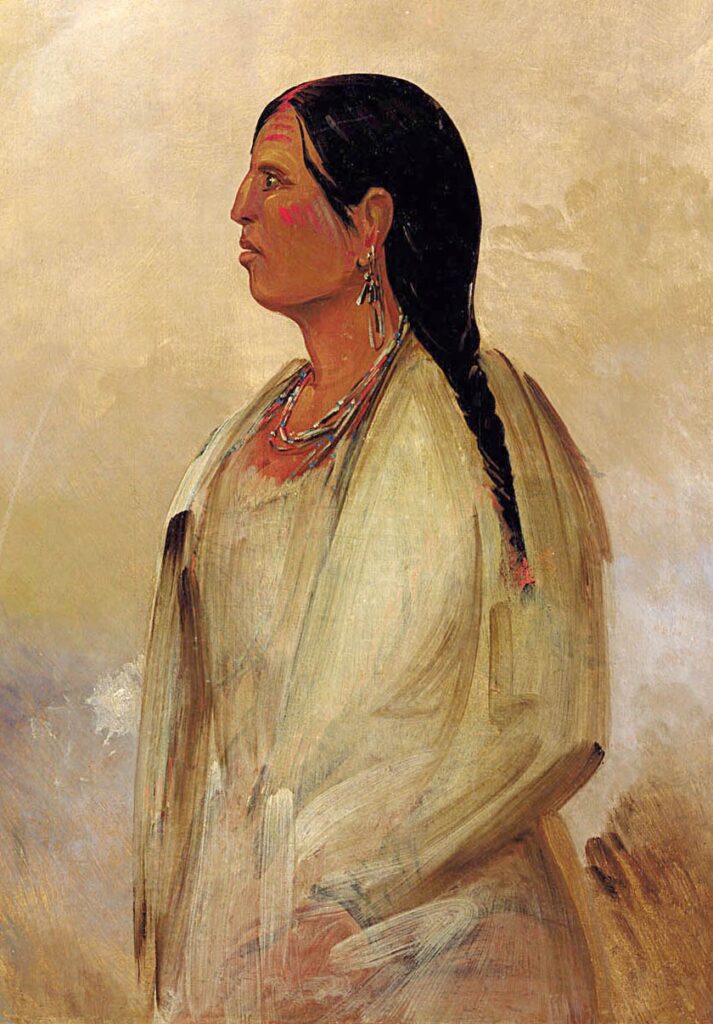
According to family trees and oral tradition, Tiyo “Dancing Wind” was born in 1758 in Mississippi. She was Choctaw, and her father was said to be a Choctaw chief. In 1780, at age 22, she married Benjamin Tanner in South Carolina.
Benjamin was born in 1756 in Wahee, Marion County, South Carolina. He moved between Mississippi and South Carolina throughout his life. Together, Tiyo and Benjamin had children — how many depends on who you ask. Family accounts range from 6 to 17. Untangling the Tanner children is a project for another day.
The family’s story takes a heartbreaking turn with the Indian Removal Act. When Benjamin took their son Thomas and some of the daughters west to Mississippi to claim land left by his father, Tiyo was supposed to follow with the remaining children. She never made it. Tiyo and other Choctaw people were forcibly removed from South Carolina and marched to the Oklahoma Indian Territory as part of the Trail of Tears. She died in Oklahoma — the year is uncertain.
The children who had already gone to Mississippi with Benjamin eventually made their way to Texas, where many of their descendants live to this day. Some of Tiyo’s children in South Carolina were never captured by the government and remained there.
It is a story of separation, survival, and loss. And for a while, I believed every word of it.
The Complications Begin
The more I researched, the more questions surfaced.
Some researchers argued that Benjamin Tanner, was Chickasaw, perhaps even a chief. Others said he was not Chickasaw at all — but the son of David Tanner and Hopestill Worden, an entirely European lineage. The name “Bear King,” sometimes associated with Benjamin, is said by some to have been a name given to him by the Choctaw people through his connection to Tiyo’s family — not a hereditary tribal title. Some records suggest Benjamin was actually married to a woman named Julianne Foxworth, though multiple sources dispute this. And some accounts place Tiyo’s death on the Trail of Tears itself, not in Oklahoma Territory.
Each of these discrepancies, taken alone, might be explained away. Oral histories are imperfect. Early South Carolina records are notoriously sparse and unreliable. But together, they began to raise a larger question.
Vernon Tanner and the Chaloklowa Chickasaw
That larger question has a name attached to it: Vernon Tanner.
The “Chaloklowa Chickasaw” tribe — the tribal identity connected to Benjamin and Tiyo’s descendants — was established by Vernon Tanner in Indiantown, South Carolina on June 21, 1999. It is registered as a nonprofit educational organization, with programs offered to schools, civic groups, churches, scout troops, YMCA programs, and local libraries, focused on sharing Native American culture and correcting common myths about Indigenous peoples. Vernon serves as its first chief, using the title Chief Tanner and the name “Mingo Big Bear Claw.” He claims Tiyo “Dancing Wind” as his sixth great-grandmother.
None of that is inherently suspicious. Cultural education organizations do important work. But several pieces of evidence have led many researchers — myself now among them — to seriously question whether the foundational story is historically accurate.
First, the DNA. Descendants of Benjamin and Tiyo’s children who went to Mississippi and eventually Texas have been tested. The results? Swiss ancestry. Zero percent Native American. If Tiyo was Choctaw that result is extremely difficult to explain.
Second, the documents. There is not a single official record with Tiyo’s name on it. Not one. Benjamin has a few. But for a woman who supposedly walked the Trail of Tears — an event for which the U.S. government kept reasonably detailed removal records — her complete absence from the historical record is significant. The most complete collection is the Dawes Commissions’ Final Rolls of the Five Civilized Tribes, 1899–1914. These records were far from perfect, but they were not nothing.
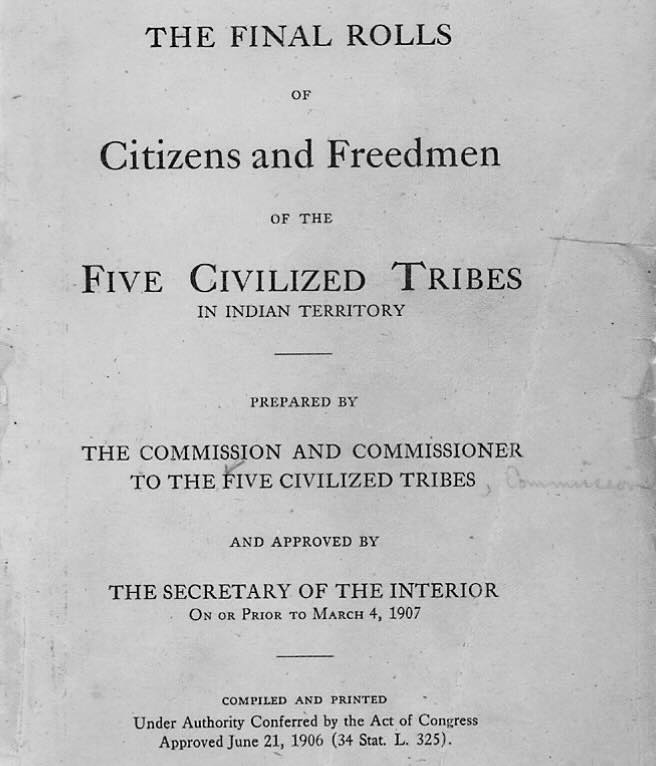
Third, the DNA transparency question. Neither Vernon Tanner nor his sons have made their DNA results publicly available for independent scrutiny.
Where This Leaves Me
I haven’t closed the book on Tiyo “Dancing Wind.” In genealogy, absence of evidence is not always evidence of absence. South Carolina records from this era have real gaps. Oral traditions carry real history, even when documentation fails. And that 2% — whether Ancestry calls it Asian or Family Tree DNA calls it Native American — is still sitting in my results, unexplained.
But I’ve learned to hold this story differently than I did the day I first found her name.
What I know for certain: I was excited. I wanted it to be true. My father’s stories felt confirmed. That emotional pull is part of the genealogy experience — and it’s also exactly why careful, evidence-based research matters. The paper trail, the DNA, the documents — they don’t always tell the story we hoped for.
And there’s one thing I keep coming back to: my father was telling us we had a Native American heritage long before Vernon Tanner founded his organization in 1999, and long before the internet made it so easy to find — and spread — both facts and mis-facts. Whatever the truth about Tiyo turns out to be, my father wasn’t repeating something he read online. That story came from somewhere.
I don’t know yet if Tiyo “Dancing Wind” is truly my fifth great-grandmother. I don’t know where she is in the records, or if she’s there at all. But I’m not ready to close the file.
The search continues.